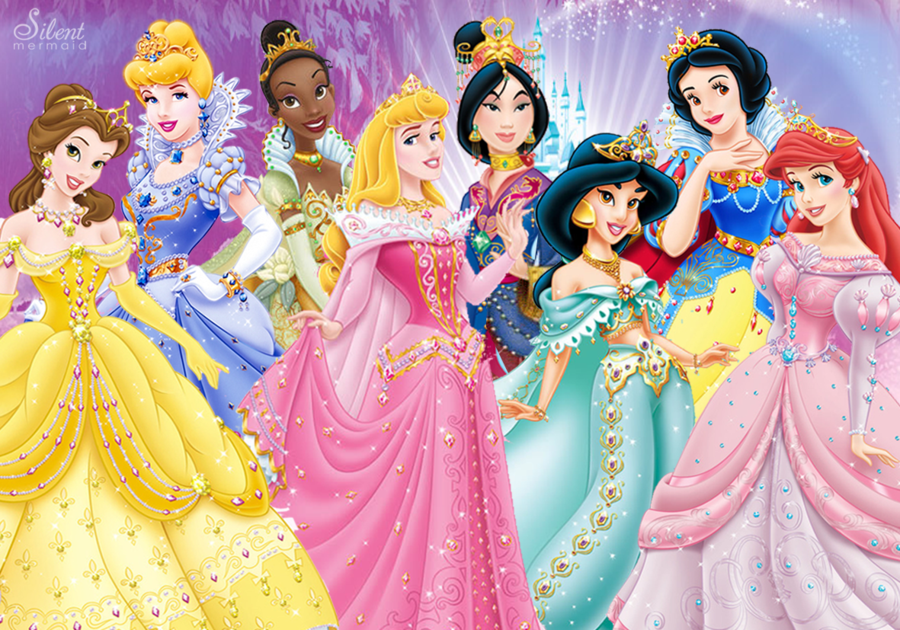
From my detached male perspective, I always thought there was a strong continuity through all the Disney Princess movies, but after watching several more intently with my daughter, it’s apparent that there is a stark contrast between the older films and the post-sexual-revolution films.
The old ones were great stories with strong princess characters who were firmly entrenched in a traditional framework. The modern films steal the natural allure girls have for the princess trope and redirect it to an anti-princess model, which promotes horrible feminist personality traits in young girls and destroys the natural traditional framework in which princesses exist.
The Original Trifecta
When Disney first began its princess canon—Snow White (1937), Cinderella (1950), and Sleeping Beauty (1959)—the stories celebrated virtues that had long defined fairy-tale femininity: grace, humility, courage, beauty, and faithfulness.
The original princesses lived within a moral order that assumed there was something noble about love, marriage, family, and destiny. They sang to animals, dreamed of love, and endured trials with quiet dignity. Their strength wasn’t loud or defiant; it was moral, patient, and redemptive. Snow White brings joy to a house full of unruly men. Cinderella transforms cruelty with kindness. Aurora embodies purity and faith in the face of dark enchantment.
They were great truly feminine role models and they were loved by their audience—male and female alike.
The Anti-Princess
Following a 40-year hiatus, Disney returned to the princess genre with The Little Mermaid (1989), but everything changed. Ariel marks the birth of the anti-princess—a heroine whose story revolves not around virtue, but around self-assertion. She’s beautiful and magnetic, yes, but restless, rebellious, and unsatisfied with her world. “I want more,” she sings, and that “more” is no longer about growth within her world but escape from it. Her father’s authority, her family’s traditions, and even her own voice are rejected in favor of personal fulfillment. The story ends with her getting what she wants—but at the cost of a broken natural order.
This new kind of princess retained the trappings of royalty—the gowns, the music, the romance—but shed the moral framework that gave those things meaning. In the early 20th-century films, a princess was royal because she embodied something elevated and ordered. In the post-Ariel era, a princess becomes royal by defying order.
As Disney’s influence grew, so did this new model. Pocahontas (1995), Mulan (1998), Frozen (2013), Moana (2016)—each heroine stands against authority, often against her own family or culture, in the name of “being herself.” The language of the fairy tale was replaced with the slogans of modern self-expression. Where once the princess was admired for her grace under duty, she is now celebrated for her defiance of it.
Ironically, these films still borrow all the aesthetic splendor of the traditional princess—the beauty, the music, the magic—but they use it to sell a fundamentally anti-princess worldview. The glitter and gowns are still there, but the ideals have been hollowed out. It’s like dressing rebellion in a tiara and calling it empowerment.
If Ariel began the age of the anti-princess, Merida from Brave (2012) may represent its final form. On the surface, Brave appears to be a mother-daughter story set in a lush, mythic Scotland. But beneath the surface lies something deeply ideological: a total inversion of the princess archetype.
There is no romance, no destiny, no moral hierarchy—just a celebration of self-will. The “princess” is now a creature of impulse and ego. She wants to be free, but freedom is never defined beyond “doing what I want.” The old fairy-tale ideal of harmony—between self and duty, beauty and goodness—is replaced with emotional independence and self-justification.
A Tangled Exception
Tangled (2010) stands as a rare, almost redemptive exception to the modern anti-princess. Rapunzel’s story—though modernized and humorous—still hints at a deep longing for the traditional framework the other films discarded. Unlike Merida, Rapunzel isn’t running from family or duty; she’s trying to find her way back to both. Her heart aches for the truth about her past, for the lost home and parents she’s been kept from. In that sense, Tangled is the first modern Disney film where the princess’s rebellion is directed not against her rightful order, but toward it.
There’s something deeply traditional, even biblical, about that longing: the child separated from her kingdom, yearning for restoration. Rapunzel’s journey is not one of self-discovery, but of rediscovery—of who she truly is and where she truly belongs. For much of the film, she even embodies that old-world grace and wonder: gentle, imaginative, nurturing, and filled with awe at the beauty of the world outside her tower.
And yet, even in this almost-classic arc, the modern lens intrudes. At the end, her long, radiant, golden hair—a symbol of her beauty, innocence, and the light of her royal nature—is abruptly shorn off. The transformation, presented as a triumph, feels more like a symbolic concession to modern sensibilities: the princess must lose her femininity to be “free.” It’s almost comical that the film’s final image of her liberation is a short, choppy haircut that wouldn’t look out of place at a PTA meeting.
Even her romance reflects this tension. Rapunzel doesn’t end up with a prince—the natural complement to her royal identity—but with a charming thief, Flynn Rider. He’s likable, but he’s also a symbol of the flattened moral world of modern Disney. The noble suitor has been replaced by the reformed rogue, and the princess’s marriage—once a union of virtue and destiny—is now an exercise in irony.
The Hollow Crown
The tragedy of the modern Disney princess is that she still wears the crown, but no longer believes in the kingdom it represents. The music, the gowns, the enchantment—all remain—but the moral and spiritual core has been emptied out. Where Snow White’s beauty reflected her purity, Ariel’s beauty hides her rebellion. Where Cinderella’s triumph came through humility, Merida’s comes through pride. And where Aurora’s love restored order, Elsa’s independence freezes it.
What made the early Disney princesses so enduring wasn’t passivity, as critics claim—it was virtue. They moved hearts because they embodied something higher than themselves: the eternal feminine ideal of goodness, grace, and order. They were strong not because they defied their nature, but because they lived it to its fullest.
Modern Disney has traded that moral strength for emotional noise. Its heroines speak endlessly of empowerment but seem never at peace. They are told to “be free,” yet appear rootless; to “be strong,” yet are consumed by anxiety and self-doubt. The anti-princess cannot rule because she cannot serve.
And so, in trying to modernize the princess, Disney has destroyed her. It has taken the most natural and enchanting symbol of feminine virtue and turned her into an avatar of self-worship. The result is a generation of girls who long to be princesses but have been taught to despise what a princess is.
This creates a deep confusion for young girls. The natural allure of the princess—the longing to be lovely, virtuous, admired, and cherished—is powerful and good. It points to the same timeless truths that fairy tales always hinted at: that femininity has dignity, that beauty has moral weight, and that love is transformative. But when the princess ideal is cut loose from these truths, what remains is a parody: a heroine who wants all the reverence of being a princess but none of the virtue that earns it. One can see this as a clear stepping stone to the likes of the popular Twilight series, which showcases a protagonist with no redeemable qualities who is the object of desire by two male leads—a girl who is loved without being lovable.
And so the “anti-princess princess” was born. She’s fierce but petulant, independent but rootless, proud but deeply insecure. She tells girls that the highest good is to follow your heart, unless it bolsters tradition, family, or love. And in doing so, she destroys the very thing that made the princess ideal so enchanting in the first place.
Disney, in its early genius, understood that fairy tales were moral stories disguised as fantasies. They elevated the soul while delighting the senses. But modern Disney has traded the moral for the psychological, the transcendent for the self-centered. It teaches girls to admire the princess’s crown but forget the kingdom it symbolizes.
The tragedy of the anti-princess is that she doesn’t know she’s wearing a crown she no longer believes in.
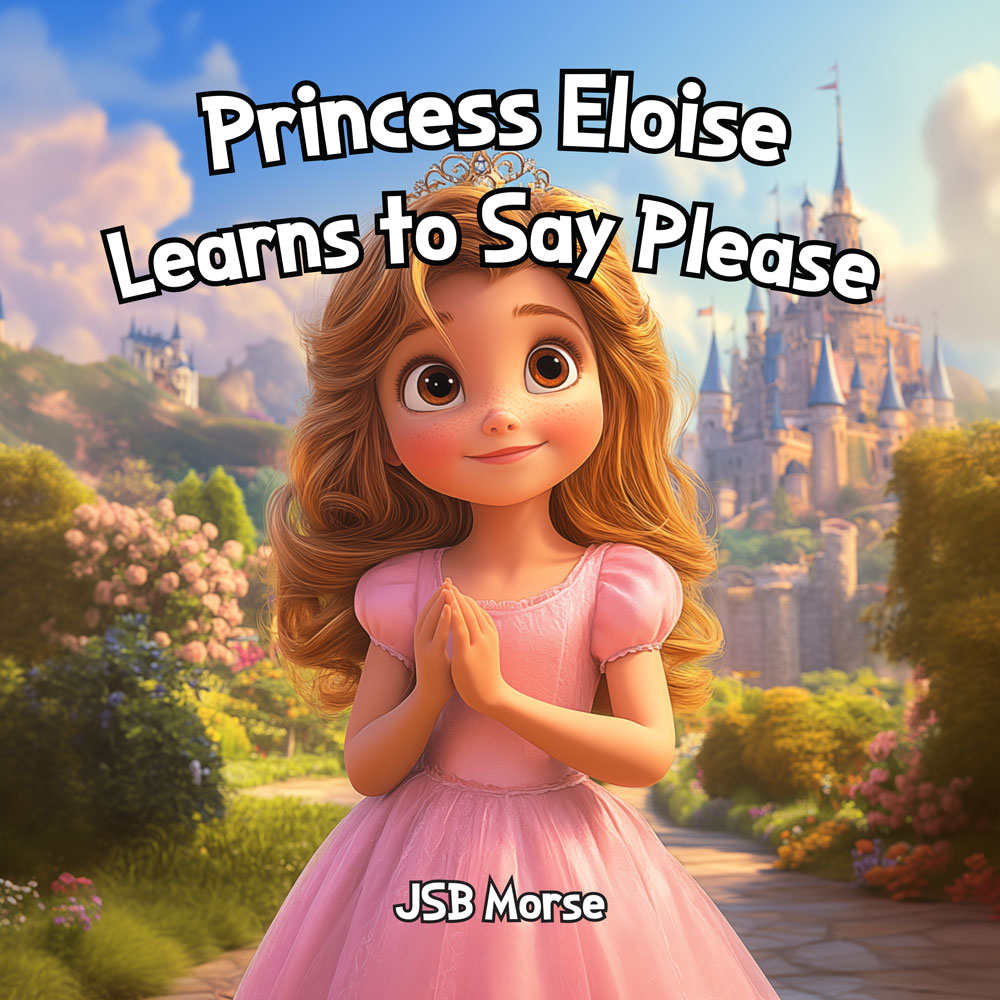
We at Libertas Kids seek to revive the traditional princess and restore her to her rightful place atop the hierarchy of fairy tales. Our first effort is Princess Eloise Learns to Say Please: