
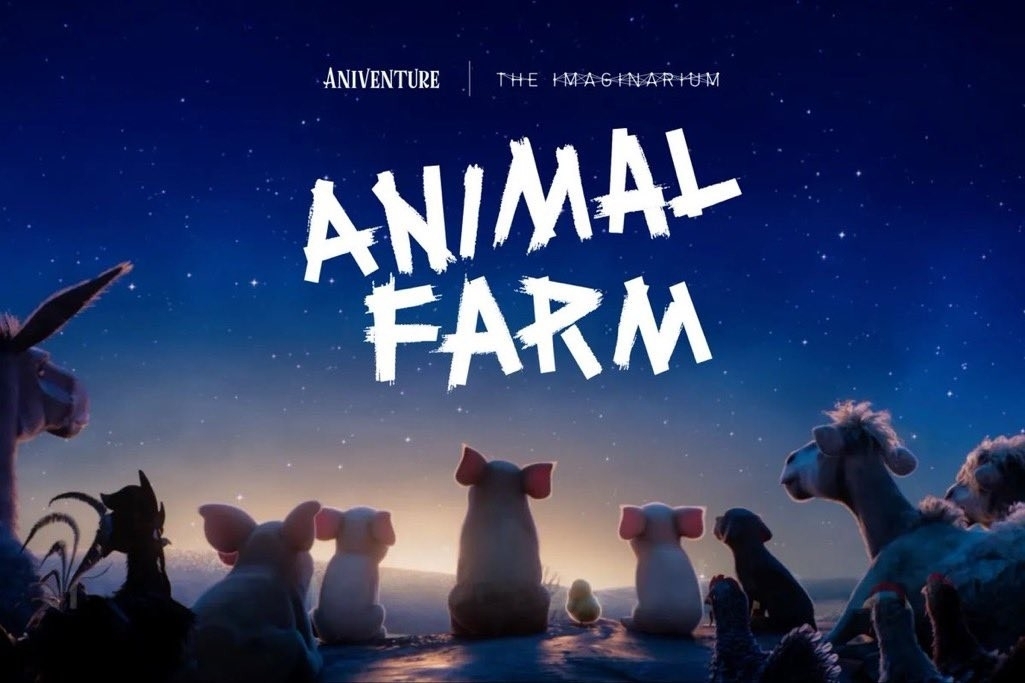
In George Orwell’s 1945 novella Animal Farm, the pigs don’t just take over the farm—they rewrite the rules, walk on two legs, and toast with their former human oppressors while the other animals watch in horror. The famous final line says it all: the creatures outside “looked from pig to man, and from man to pig, and from pig to man again; but already it was impossible to say which was which.” Orwell, a democratic socialist who fought in the Spanish Civil War and grew to despise Stalinism, crafted a razor-sharp anti-totalitarian allegory. Specifically, it skewered how the Russian Revolution’s promise of equality curdled into Soviet-style dictatorship, complete with propaganda, purges, and a cult of personality.
Fast-forward to 2026, and Angel Studios—the faith-friendly distributor behind hits like The Chosen—is bringing an animated Animal Farm: A Cautionary Tail to theaters on May 1. Directed by Andy Serkis (with a screenplay by Nicholas Stoller), the film boasts a star-studded voice cast including Seth Rogen as Napoleon, Gaten Matarazzo, Glenn Close, Woody Harrelson, Steve Buscemi, Laverne Cox, and more. It premiered at the Annecy International Animation Film Festival in 2025 before Angel picked up U.S. theatrical rights.
On the surface, the synopsis sounds familiar: farm animals rebel against their human owners, declare “all animals are equal,” and watch as the pigs consolidate power, erase truth, and crush dissent. Yet critics, early reviewers, and online commentators argue the adaptation has undergone a makeover that flips Orwell’s core warning.
Where the book indicts the internal corruption of revolutionary ideals—showing how power-hungry leaders (the pigs, standing in for Stalin and the Bolshevik elite) betray the working animals (the proletariat)—this version reportedly shifts much of the blame outward. Reviews note a pivot toward critiquing modern corporate corruption, with amplified human antagonists (including a businesswoman or tech-billionaire figure) portrayed as the corrupting force. The tone moves from bleak dystopian satire to something “more uplifting,” with cutesy designs, toilet humor, songs, and a piglet named Lucky as an audience surrogate. Some accounts suggest the ending diverges sharply, allowing the non-pig animals to successfully push back rather than resigning to the pigs’ indistinguishable merger with the old oppressors.
One IGN review highlighted how the new Animal Farm trades Stalinism for “corporate corruption,” losing some of the novella’s teeth in the process. A Variety critic described it as adopting “the celebrity voices, cutesy character designs and antic, mile-a-minute energy of big-studio American toons,” diluting the political allegory for broader, family-friendly appeal. Others have called it a “Trump-era makeover” or accused it of turning a cautionary tale about authoritarian socialism into an anti-capitalist yarn, complete with greedy humans (sometimes likened to modern billionaires) as the real villains.
Angel Studios has pushed back firmly. In statements, the company emphasizes that it is only the distributor—not the producer—and lacks creative control. The Angel Guild (its crowd-sourced membership) reportedly voted strongly in favor after viewing the film. Officials insist it remains “an anti-communism film” true to Orwell’s roots, updated for relevance to a “values-centric, family-friendly audience” while warning about how movements for equality can be corrupted. They frame it as a story celebrating democracy, freedom, and integrity.
Still, the backlash has been loud. Some fans of the original call it a “tonedeaf” inversion that misses Orwell’s point: the danger wasn’t the farmer (the old regime) so much as the new bosses who became worse than the old ones. Social media has lit up with confusion—”From Angel Studios?!”—and accusations that Hollywood (or at least this adaptation) can’t resist reframing a classic anti-authoritarian fable as a swipe at capitalism instead. Andy Serkis himself has addressed concerns in promotional clips, defending the project’s heart.
Whether the final cut delivers a faithful cautionary tail or a snout-first reinvention remains for audiences to judge when it hits theaters. In the meantime, Orwell’s pigs are probably rolling in their graves—while the new ones sip something fancier, perhaps with a side of popcorn and a family-friendly rating. One thing’s for certain: in both versions, some animals end up more equal than others. Just don’t ask which ones are wearing the lipstick this time.